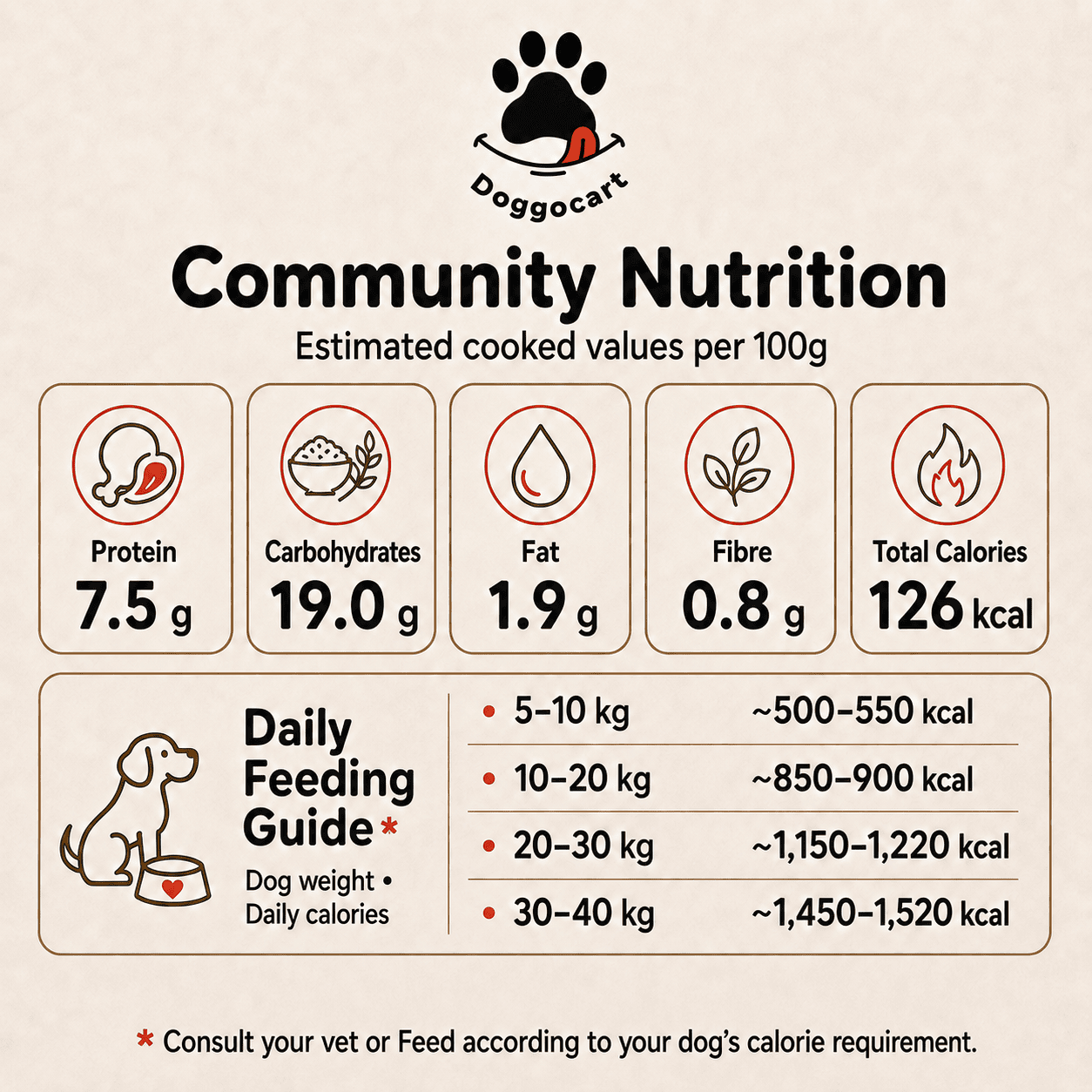

A Feeding Guide for Your Dog
Feeding guidelines are a starting point. Your dog’s actual requirement may vary according to age, activity, body condition and overall health.
This distinction is important because veterinary nutrition guidance recommends considering body condition and individual factors—not weight alone
Every dog is different, so feeding quantity should not be decided by body weight alone. Consider the following factors when estimating your dog’s daily calorie and food requirements.
Body Weight
Your dog’s current and ideal body weight provide a starting point for estimating daily calorie requirements. Portions should be reviewed as your dog gains, loses or maintains weight.
Age and Life Stage
Puppies, adult dogs and senior dogs have different nutritional needs. Growing puppies generally require more energy relative to their size, while older dogs may need portions adjusted according to their metabolism and mobility.
Activity Level
An active dog that exercises, works or plays regularly may require more calories than a dog with a quieter lifestyle. Daily portions should reflect your dog’s usual level of activity.
Body Condition
Two dogs of the same weight may have different feeding requirements. Observe your dog’s waist, ribs and overall body shape to determine whether the current portion is helping maintain a healthy body condition.
Neutering Status
Neutering may affect a dog’s metabolism and energy requirements. Some neutered dogs may require fewer daily calories to maintain a healthy weight.
Health Conditions
Dogs with allergies, digestive sensitivities, weight concerns or medical conditions may require specialised feeding advice. Consult your veterinarian before making significant changes to their diet or portions.
Treats and Other Food
Treats, table food, supplements and other snacks contribute to your dog’s total daily calorie intake. Include them when calculating the main food portion to avoid unintentionally overfeeding.
Remember: Feeding guidelines provide a starting point, not a fixed prescription. Monitor your dog’s weight, body condition, digestion and energy levels, and adjust the quantity gradually with veterinary guidance when necessary.
Nutritional details for our offerings:
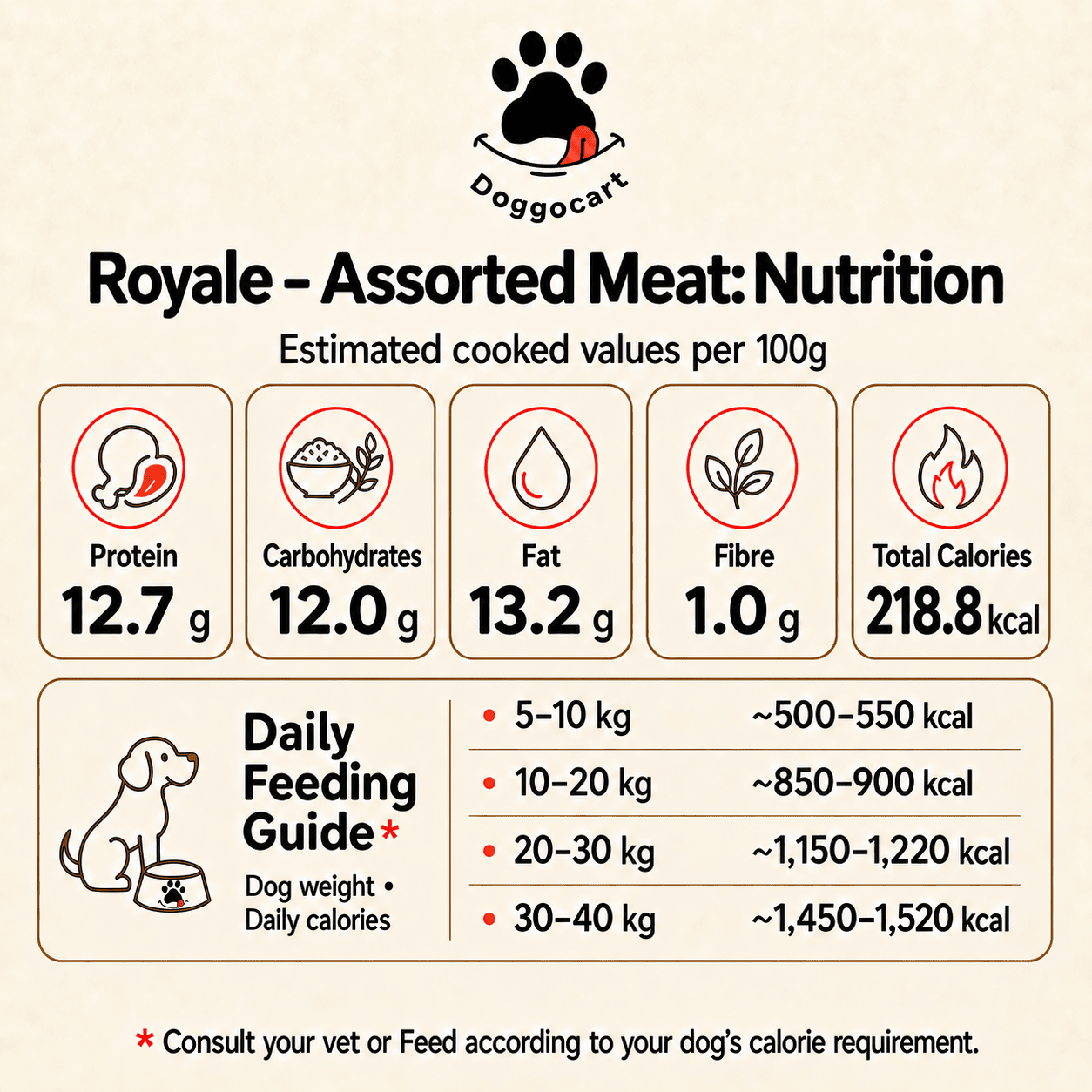
Royale Assorted : ~218kcal per 100g
Royale Assorted : ~218kcal per 100g
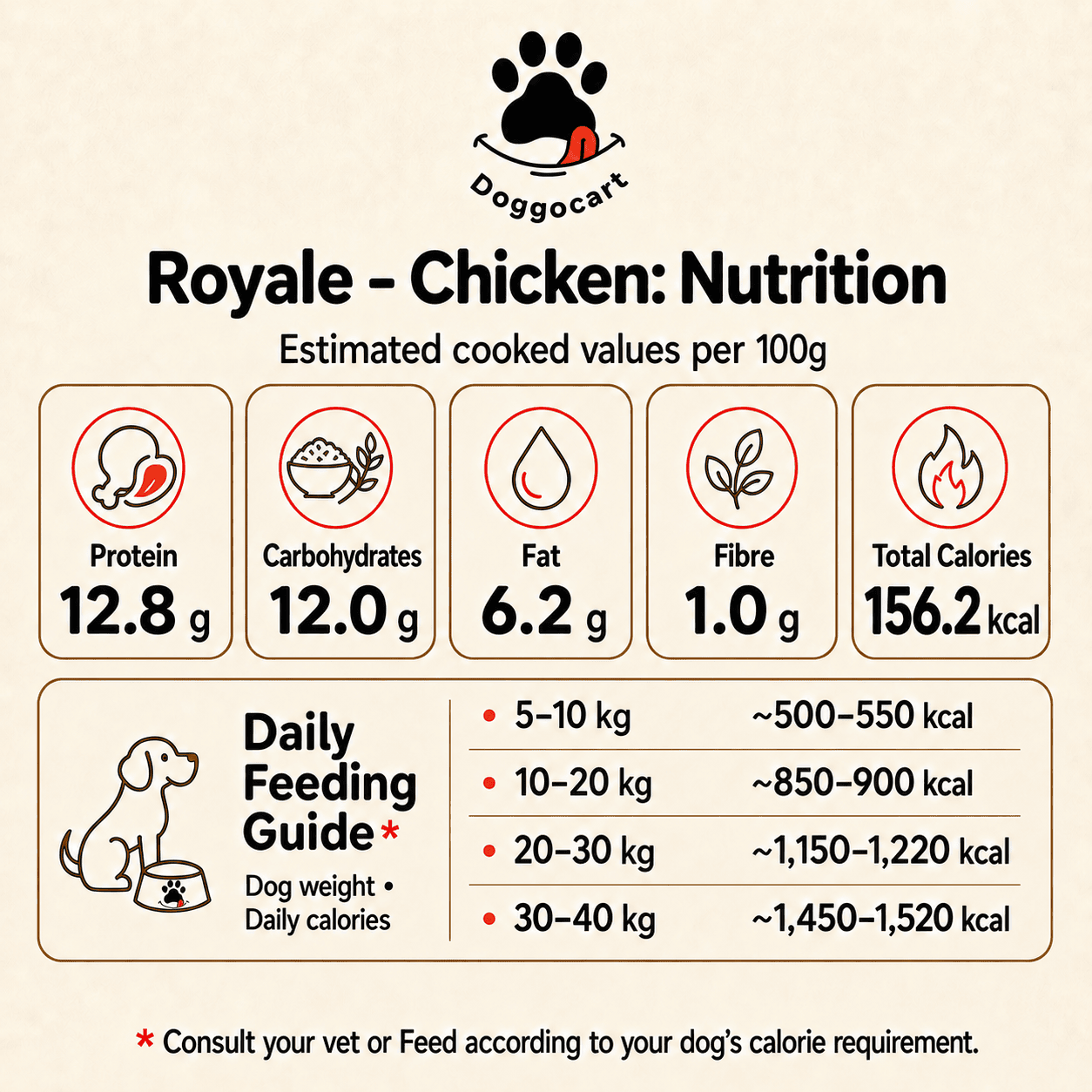
Royale Chicken : ~156kcal per 100g
Royale Chicken : ~156kcal per 100g
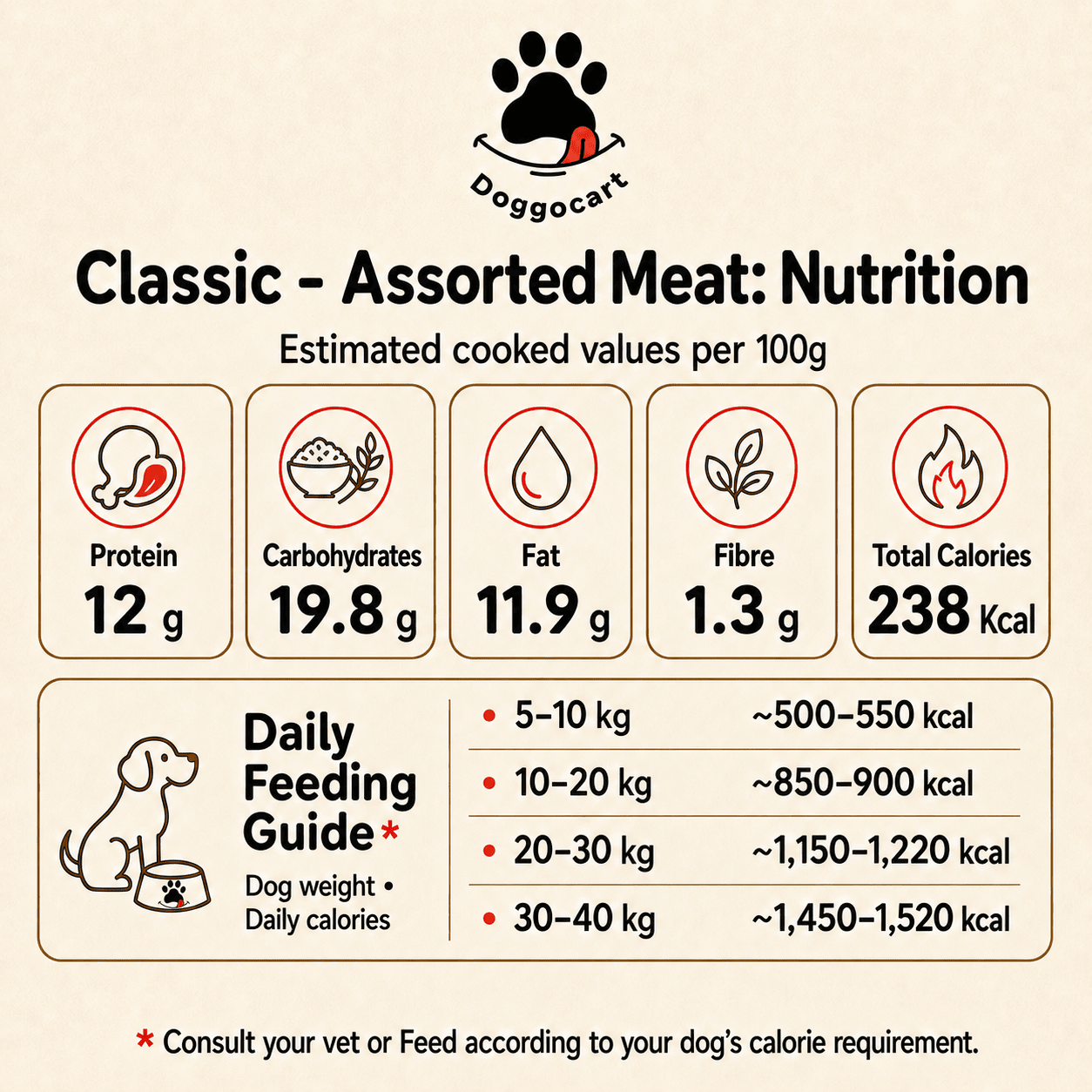
Classic Assorted : ~238kcal per 100 g
Classic Assorted : ~238kcal per 100 g
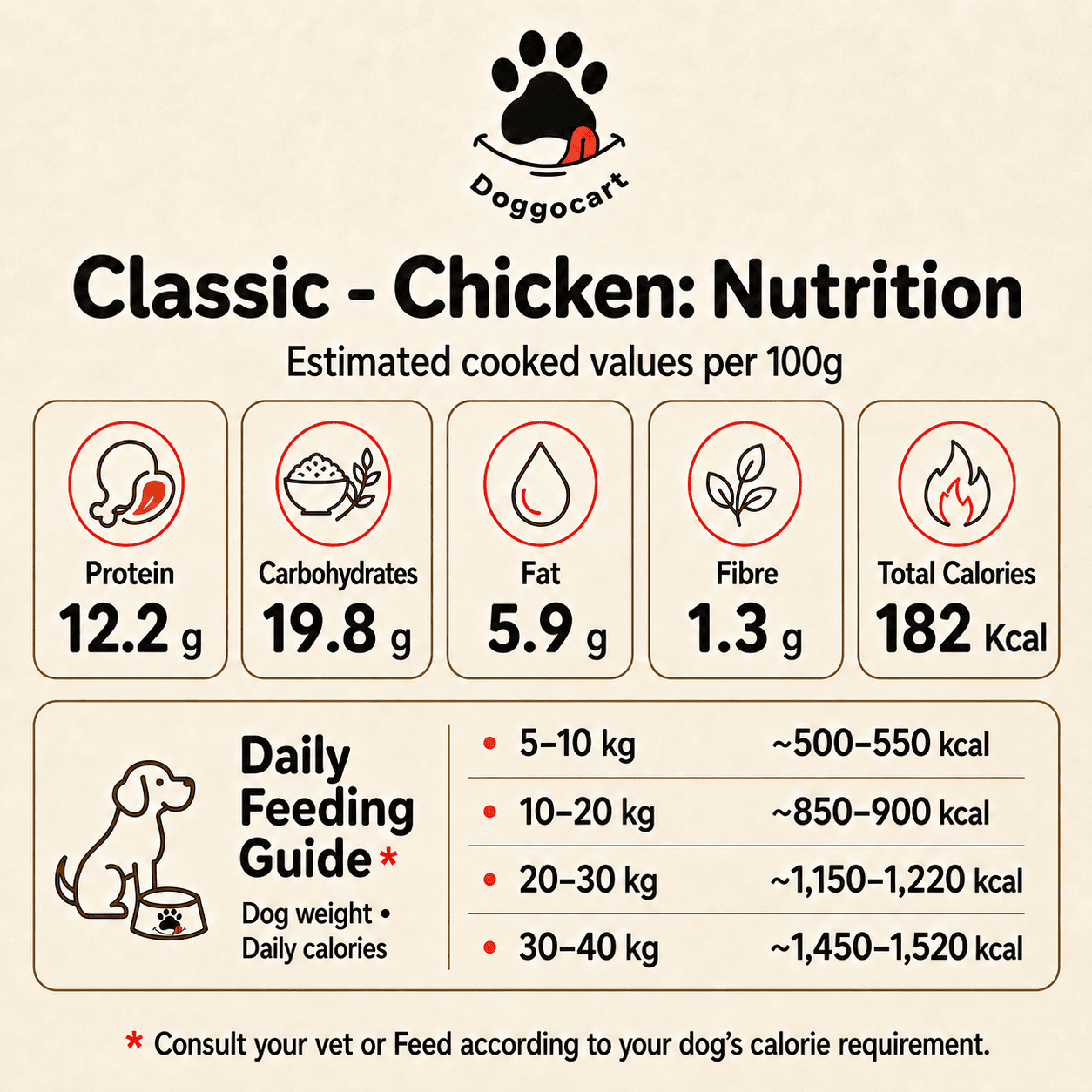
Classic Chicken : ~182kcal per 100g
Classic Chicken : ~182kcal per 100g